Choosing the Right Paper Weight for Your Writing Style
Mar 10, 2026
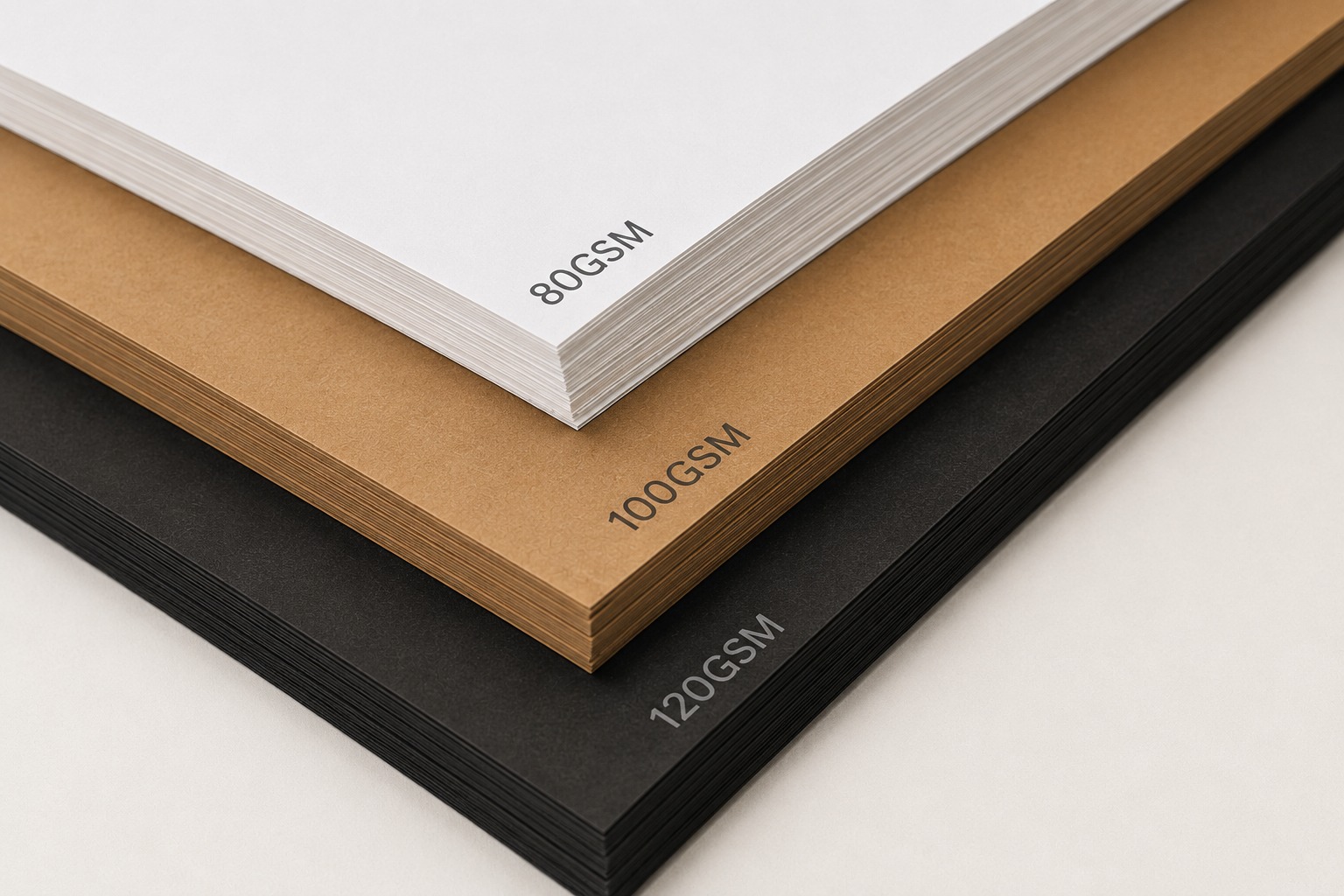
In a world increasingly dominated by the fleeting glow of digital screens, the act of putting pen to paper has transformed from a daily necessity into an intentional workflow. There is a quiet, tactile romance in choosing a notebook, unscrewing a fountain pen, and watching an idea take physical form. But any true analog enthusiast knows that the secret to a flawless writing experience doesn't just lie in the instrument you hold; it is deeply rooted in the surface you choose. The weight of your paper dictates the entire sensory journey of writing. It alters how the ink behaves, how the nib glides, and how the book feels in your hands.
Understanding Paper Weight: The Fundamentals
Before matching paper to your personal style, it helps to understand how paper weight is measured. In the design and stationery world, you will most frequently encounter GSM, which stands for Grams per Square Meter. The higher the GSM, the thicker and heavier the paper.
- 30 to 60 GSM: Ultra-lightweight (tissue paper or traditional airmail stationery)
- 70 to 90 GSM: Standard notebook and office printing paper
- 100 to 120 GSM: Premium journal paper with added substance
- 130 to 160+ GSM: Heavyweight, mixed-media, and sketchbook-grade pages
In a minimalist aesthetic, every detail must serve a purpose. Thickness isn't inherently better than thinness; rather, each weight possesses a distinct personality and utility.
The Minimalist Thinker: Light Pages for Fluid Thoughts (50–70 GSM)
There is a distinct subset of writers who crave frictionless speed. For rapid-fire brainstorming, stream-of-consciousness journaling, or chaotic daily to-do lists, ultra-lightweight paper ranging from 50 to 70 GSM is an elegant revelation. Famously epitomized by legendary Japanese Tomoe River paper, these ultra-thin pages feel almost like silk between your fingers. They allow for incredibly thick, high-capacity notebooks that remain slim and portable. However, light paper requires an intentional choice of writing instrument — it pairs beautifully with fine-liner pens, light gel pens, and hard-lead pencils.
The Daily Chronicler: The Versatile Middle Ground (80–90 GSM)
For the majority of writers, the sweet spot lies right in the middle. The 80 to 90 GSM range is the unsung hero of the stationery world. It represents the perfect equilibrium between durability and sleekness, making it the ideal canvas for daily journaling, standard note-taking, and professional meeting logs. At this weight, the paper gains enough density to handle a wider variety of pens — standard ballpoints, vibrant gel ink, and even many everyday fountain pens — without fearing disastrous bleed-through. There is a satisfying, subtle resistance when your pen tip meets an 80 GSM page.
The Fountain Pen Aficionado: Premium Substance (100–120 GSM)
To write with a fountain pen is to appreciate the slow elegance of liquid ink. Fountain pens are notoriously demanding of their canvas. Liquid ink requires a paper that can absorb moisture evenly without letting it spread outward (feathering) or sink downward (bleeding). For the writer who treasures the rich shade of a stub nib or the metallic sheen of premium ink, 100 to 120 GSM is the non-negotiable standard. Paper in this premium weight category feels instantly luxurious. It is opaque, crisp, and heavy enough that ghosting becomes a distant memory. This weight is also highly accommodating to dark rolling balls and heavy-handed writers.
The Creative Hybrid: Heavyweight Canvas (130–160+ GSM)
Many use their journals as space for visual thinking, combining written words with ink washes, mildliner highlighting, brush lettering, or occasional watercolor sketches. If your writing style is expressive, visual, and layered, you need paper that behaves more like a canvas. Paper in this category is incredibly robust. It feels like fine cardstock between your fingertips. You can layer heavy ink, stamp designs, and use wet brush pens without the slightest hint of warping or buckling.
Designing Your Ideal Writing Workflow
| Writing Type | Ideal Weight | Feel & Character |
|---|---|---|
| The Nomad Fine-liners, pencils, rapid brainstorming | 50–70 GSM | Featherlight, tactile crinkle, ultimate portability |
| The Everyday Writer Ballpoints, standard gel pens, daily logs | 80–90 GSM | Balanced, versatile, minimal ghosting |
| The Purist Fountain pens, rich inks, heavy-handed pressure | 100–120 GSM | Rich, opaque, bleed-resistant, archival |
| The Visual Creator Brush pens, markers, mixed-media journaling | 130–160+ GSM | Cardstock feel, zero warp, ultimate structural strength |
Cultivating Your Perfect Match
Ultimately, choosing the right paper weight is an intimate exercise in self-awareness. It asks you to observe how you write, what tools bring you joy, and how you want your thoughts to be preserved. If you appreciate a clean, clutter-free life, your notebook should reflect that same intentionality. Do not look for the thickest paper simply because it feels expensive; look for the weight that removes all friction between your mind and the page. When your pen, your ink, and your paper weight exist in perfect harmony, writing ceases to be a chore — it becomes a dependable creative system.
The right paper is waiting for you.
Browse our curated range of journals and notebooks, each chosen for the quality of their pages.
Find Your Perfect Journal